
McDuffie County Warrant Searches
Because the McDuffie County Sheriff's Office does not publish a public warrant-search form, the most direct starting point is its warrant and Records Division number, 706-597-3862. Have the complete legal name and date of birth ready. Ask whether the office can confirm the record by telephone, whether identification or an in-person visit is required, and which court issued it. Georgia's official guidance likewise directs a person seeking an existing warrant to the sheriff in the relevant county.
A responsible McDuffie County warrant check follows the record to its source. Magistrate Court issues criminal arrest and search warrants; Superior Court handles felony matters; Thomson Municipal Court controls its traffic, ordinance, and qualifying misdemeanor cases. A lawyer can make the inquiry when immediate custody is a concern and can ask the issuing court about surrender, bond, or recall without treating a search result as legal advice.
- Prepare the full legal name, date of birth, and any case, citation, or warrant number. Georgia recommends those identity details before contacting a sheriff.
- Call the McDuffie warrant line at 706-597-3862. If directed to appear, bring government-issued identification and understand that an active warrant can result in custody.
- Contact the named court. Use Magistrate Court at 706-597-2618 for county warrant process or Thomson Municipal Court at 706-597-7385 for a city citation or missed date.
- If telephone confirmation is unavailable, submit the sheriff's written Open Records request or ask the Clerk of Superior Court about an open court file.
- For another Georgia county, repeat the check with that county's sheriff. No single statewide public Georgia warrant name search replaces local confirmation.
McDuffie's No-Portal Reality
No official McDuffie County active-warrant roster, most-wanted page, or searchable sheriff database was found during the source review. That absence changes the search sequence: a blank webpage is not a negative warrant result. The Georgia three-step warrant instructions tell the public to identify the county, gather a full name and birth date, and contact the sheriff.
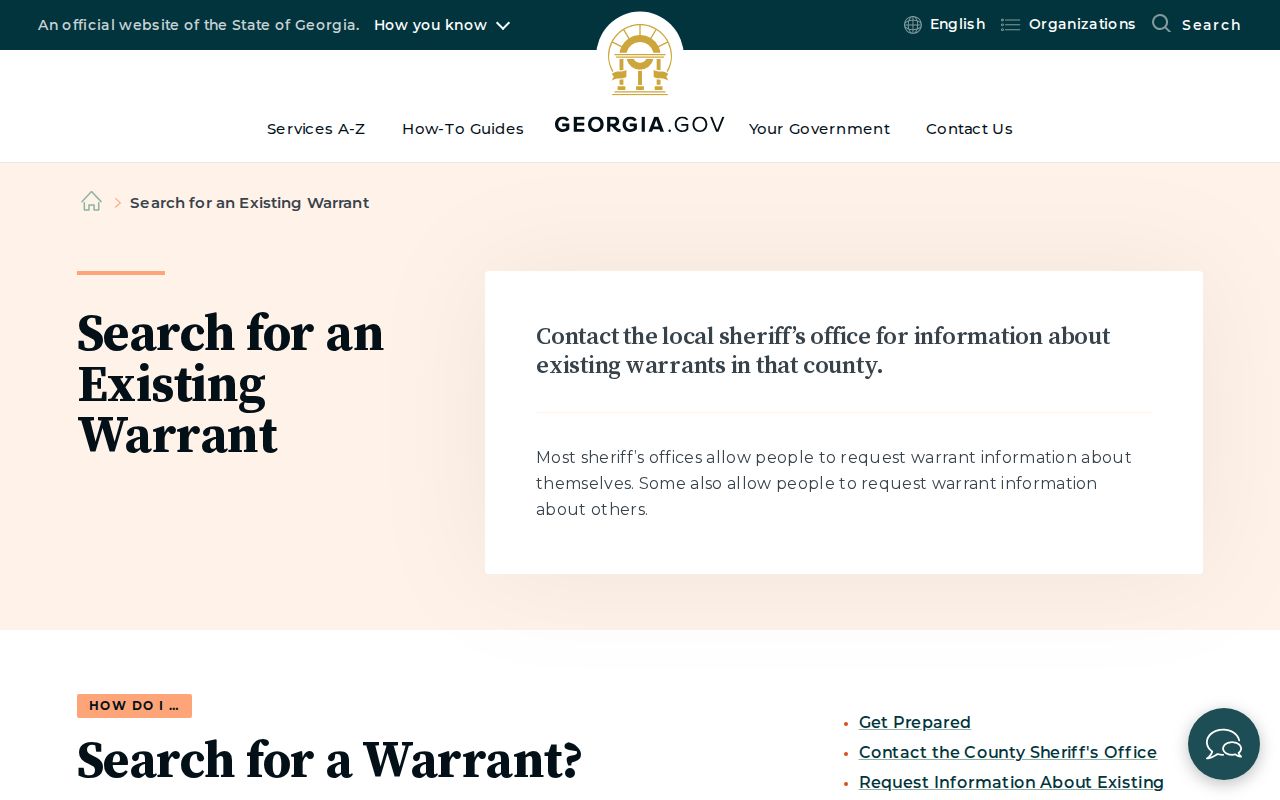
The official state screen reinforces why the local phone channel is the practical gateway. It also warns that an in-person inquiry can lead to immediate arrest when a warrant is active, so counsel may be the safer intermediary.
Note: An unavailable online list does not mean McDuffie County has no active warrant for the name being checked.
What a Warrant Search Asks For
McDuffie has no observed public warrant form, so it would be inaccurate to claim that a web portal accepts partial names or provides filters. The fields below are the information supported by Georgia guidance and local request materials. Supply only what the sheriff, clerk, or court asks for, and distinguish identity fields from record-location details.
| Field Label | Type | Required | Notes |
|---|---|---|---|
| Full legal name | Identity | Usually | Georgia guidance says to prepare it; no partial-match behavior is published. |
| Date of birth | Identity | Usually | Helps separate people with similar names. |
| Case or warrant number | Record locator | If known | No official public McDuffie number format is published. |
| Citation number | Municipal locator | If applicable | Useful for Thomson traffic matters; the payment portal fields are behind a captcha. |
| Issuing court | Jurisdiction | If known | Routes the request to Magistrate, Superior, or Thomson Municipal Court. |
McDuffie Written Requests Fill the Gap
The sheriff's Open Records request instructions provide a documented fallback when the warrant line cannot supply a public answer. Requests must be in writing and should describe the record closely enough for staff to locate it. The county form inventories the requested record type, requester contact details, preferred delivery by fax, mail, email, telephone, or pickup, and the intended records use. In-person pickup requires identification.
Georgia's Open Records process generally calls for production within three business days or a written explanation of the delay. Search, retrieval, copying, or redaction charges can apply, and the sheriff warns that obtaining records through this channel does not substitute for criminal discovery. Ask for an estimate before authorizing costly work and keep a copy of the request.
McDuffie County Warrant Search Results
There is no local public results screen with a verified fixed schema. A court file, telephone confirmation, or responsive record may contain some of the following items, depending on the warrant and access limits. Read the issuing court and current status first. A historical entry can remain in a case file after service or recall, so the existence of a document is not the same as an active warrant.
| Warrant number | A locator such as WARRANT NUMBER; no McDuffie public format was verified. |
|---|---|
| Subject identifiers | Name and birth date used to distinguish the correct person. |
| Charge or allegation | The cited offense or reason for the judicial process, not a finding of guilt. |
| Issuing court and date | The court that controls questions about the case and when the warrant issued. |
| Bond and status | Any stated bond terms and whether the warrant is active, served, recalled, quashed, or otherwise closed. |
McDuffie PeachCourt Is Not a Warrant List
The Georgia Courts e-access directory lists McDuffie Superior Court under PeachCourt, an account-required provider. That service may help locate an open Superior Court docket, but the research does not establish it as a complete or current McDuffie County warrant search. It should be treated as a court-record layer, not as proof that no warrant exists.
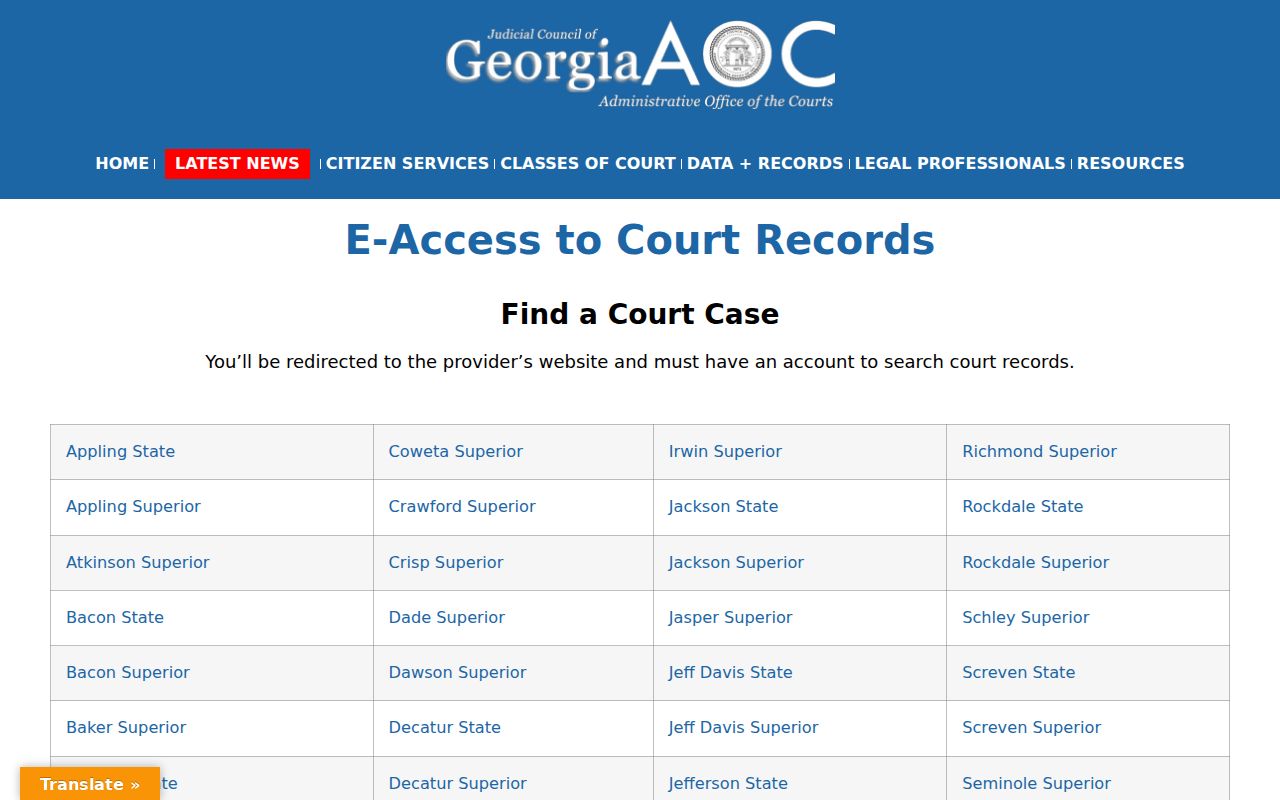
The account requirement and court-specific scope explain why the sheriff warrant line and issuing court remain necessary. Juvenile or sealed records are excluded from ordinary public access, and a newly issued or unserved warrant may not appear in a docket view.
McDuffie County Warrants: Who Holds What
The sheriff is the county service and custody contact, while the issuing court owns the judicial record. McDuffie Magistrate Court at 210 Railroad Street issues criminal arrest and search warrants and conducts first appearances. The Clerk of Superior Court, also listed locally for Magistrate and Juvenile Court, manages open Superior and related court files. Thomson Municipal Court keeps its own traffic, ordinance, and qualifying misdemeanor cases at 309 Main Street.
Dearing has no published municipal warrant system; county materials say the sheriff serves the town. A Dearing resident should therefore begin with the McDuffie warrant line and follow the cited court. GCIC is a criminal-justice system, not a public statewide warrant portal, and DDS records a traffic failure-to-appear suspension rather than supplying a warrant lookup.
When McDuffie Names Match but Records Do Not
A matching name alone is not enough to identify a warrant subject. Use the date of birth, case number, citation number, and court to resolve a common-name collision. Do not infer identity from an address, an unverified third-party entry, or a court record that lacks a current status. The local sheriff and issuing clerk can explain which identifiers they need without confirming information that is restricted.
- Active
- Issued and not shown as served, recalled, quashed, or closed by the responsible authority.
- Served
- Executed on the named person; the underlying case can still be pending.
- Recalled
- Withdrawn by the issuing court after the required court action.
- Failure to appear
- A missed required court date that may lead to a bench warrant and, in traffic matters, a DDS consequence.
Note: Ask the issuing court to explain its current status language before acting on a similar-name record.
Which Warrants Stay Restricted
The Georgia Open Records Act guidance favors access to public records but recognizes exemptions and redaction. McDuffie's clerk says court files are open except juvenile, adoption, and court-sealed records. Law-enforcement material may also be withheld where an exemption applies, including sensitive active-investigation information. A request should be narrow enough for the custodian to separate releasable material from protected details.
The official Open Government explanation gives the response, cost, and exemption framework used for a McDuffie County warrant-record request.
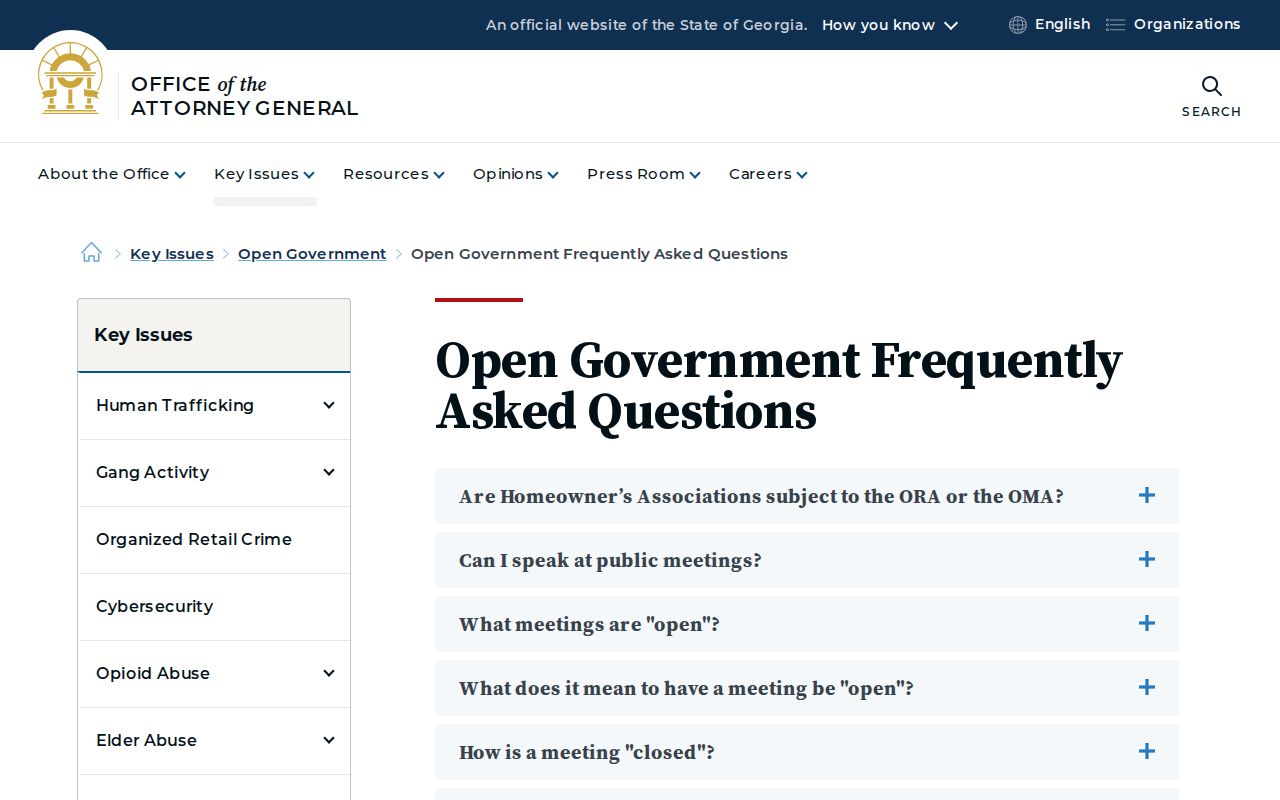
The image captures the state access rules, but those rules do not turn every warrant into a public online record. The custodian must apply the governing restriction to the requested material.
Key Rules:
Court-sealed warrants are not released through ordinary public access.
Juvenile warrant records are restricted under Georgia law and the clerk's published access policy.
An investigative exemption or timing gap may limit disclosure; absence from public material is not proof that no warrant exists.
Confirm McDuffie Warrants Before Acting
When a McDuffie County warrant check produces a possible match, record the office contacted, date, case identifier, issuing court, and exact status given. Then contact the issuing court or have counsel do so. Ask whether an appearance is required, whether bond is set, and what documented action recalls or closes the process. Never send money because an unsolicited caller claims a warrant exists; the McDuffie County Sheriff's Office warns that it does not call to collect warrant money.
A Thomson missed-date matter follows the municipal clerk's procedure, not a generic sheriff payment. A Superior or Magistrate matter follows that court and any jail bond directions. Keep receipts and written recall or release documents, then verify the status again with the originating office. This last confirmation matters because payment, a court appearance, and an updated records system are separate events.