
How Arrest Warrants Work in McDuffie County
A McDuffie County arrest warrant is signed paper, not a hunch. It authorizes officers to take the named person into custody. Under O.C.G.A. § 17-4-40, a superior, city, state, or magistrate judge, or a municipal officer with magistrate powers, may issue one on probable cause supported by sworn information. McDuffie County Magistrate Court expressly lists criminal and search-warrant issuance among its duties. Understand the pieces before you chase records, because the application, the signed warrant, the court file, and the booking or bond entry are different documents with different custodians. An application alone is not an issued warrant. The applicant states facts under oath, and the judicial officer then decides whether probable cause exists. A private applicant generally triggers a hearing and notice effort, subject to statutory exceptions. Once signed, the warrant authorizes arrest, and any accusation still proceeds through the criminal court process. Felony records may be kept through Superior Court in the Toombs Judicial Circuit. Keeping those layers straight prevents a blank application, a police report, or a later booking entry from being mislabeled as the warrant itself, and it explains why the court and sheriff can hold related records with different fields and access rules. The court map matters too, since no one counter holds every McDuffie County arrest warrant record. Magistrate Court issues criminal process and conducts first appearances. The Clerk of Superior Court maintains felony criminal files. Thomson Municipal Court handles city traffic, ordinance, and qualifying misdemeanor matters. The sheriff and Thomson Police serve process within their own work, but service authority does not make either agency the court that can change the underlying case. Only the issuing court can do that.
McDuffie County Arrest Warrant Review
The official Magistrate Court page lists McDuffie County warrant and first-appearance work at 210 Railroad Street, Room 1401, with 706-597-2618. It is the best court contact when process began there.
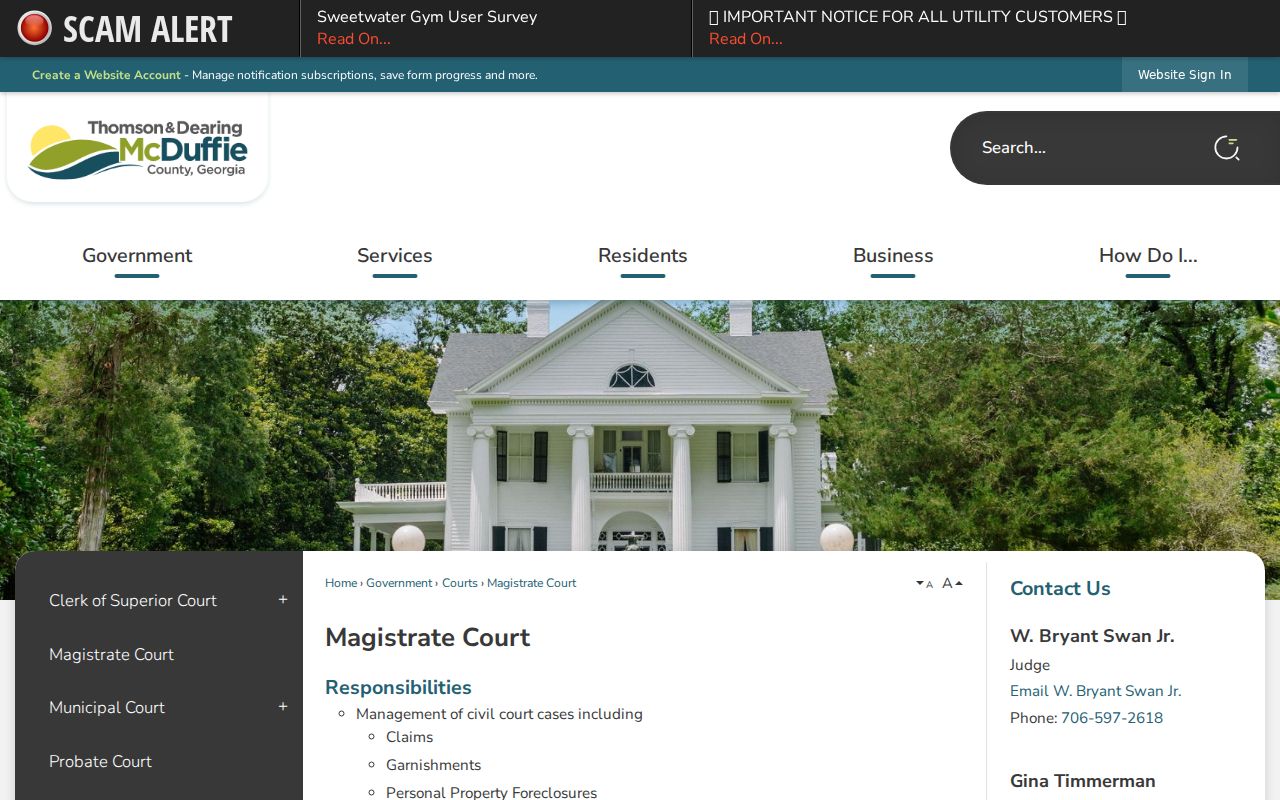
That Magistrate Court page will not run a name search for you, so plan the call before dialing. Ask which existing record the court can confirm, whether a case number exists, and which office controls the next step. Sealed, juvenile, and active-investigation material may be restricted. A status question and a copy request are different errands. The first asks whether the sheriff holds enforceable process and which court issued it. The second asks for an existing public document and may require the written Open Records route. A question about recall, dismissal, plea, or a hearing belongs to the issuing court. Keeping the requests separate helps the clerk or records staff route you, and it keeps one agency's reply from being mistaken for a complete statewide result. Before calling, gather the full name, date of birth, known aliases, incident or report number, and the approximate date. Georgia.gov points people seeking existing-warrant information to the county sheriff, and McDuffie County's official sources give 706-597-3862 as the direct warrant or Records Division number. If Magistrate Court identifies a later Superior Court case, the clerk at 706-595-2134 handles that court-file layer.
Arrest Warrants: What They Contain
McDuffie County publishes no public warrant-result screen. Its blank civilian application supports the field list below, but the custodian must say which entries exist in an issued record and which are open to view.
| Warrant number | No local format is published; keep the exact court number. |
|---|---|
| Accused | Identity, aliases, contact details, and descriptors appear on the blank application. |
| Incident | Date, time, location, police report, narrative, and witnesses may be recorded. |
| Offense | Offense and felony or misdemeanor classification are decision fields. |
| Judicial action | The magistrate decision, signature, and special bond conditions may appear. |
| Later events | Service, return, booking, bond, and case status may be added in later records. |
McDuffie County Arrest Warrant Application Sequence
The local form asks for the applicant, accused, witnesses, relationships, Georgia ties, aliases, threats, flight concerns, incident facts, report details, and a narrative. Everything comes before the oath and the magistrate's decision.
- Facts and supporting sources are recorded.
- The applicant swears to the narrative.
- The magistrate evaluates probable cause and classifies the alleged offense.
- If process issues, authorized officers serve it and later return service information.
The form shows an application-fee box marked $20 or waived. That is not a defendant's bond, fine, or a charge to clear anything. The form also separates the factual narrative from the magistrate's decision block, with fields for threat, flight, fugitive, family-violence, and bad-check indicators plus possible special bond conditions. Those fields show what the judge may review. They do not prove that every issued McDuffie County warrant exposes the same information to the public. A later court file may carry a case number, while jail and return records may document service. Ask the custodian what kind of document you are actually receiving. McDuffie County publishes no warrant-number convention or local status-code dictionary. Terms like active, served, returned, recalled, quashed, or cleared mean something only after the custodian explains them for that file. "Served" can describe execution of the warrant without saying the criminal case has ended. "Returned" may concern service paperwork. "Cleared" may mean the warrant is no longer outstanding while charges, bond terms, and a future hearing remain.
How Warrants Get Served in McDuffie County
Serving a McDuffie County warrant starts with the Sheriff's Office. It serves county process and runs the jail. Thomson Police handles city process instead. McDuffie County has no separate constable or city marshal office. Authorized peace officers can also act when jurisdiction allows. Once service happens, booking follows. Then comes a court appearance and a bond review. No walk-through hours or fixed magistration timetable are published, so call 706-597-3862 before you show up. The court controls the case; the jail answers custody questions and questions about an accepted bond. For direct contact, the sheriff's office sits at 751 Public Safety Drive and lists 706-595-2040 as its main number, while Thomson Police works city matters from 309 Main Street as a separate agency. A call to the wrong office may still get you a referral, but the safest route starts with the court or agency named in the paperwork you have. Federal process runs on a different track. McDuffie County sits in the Augusta Division of the Southern District of Georgia, where federal judges issue federal warrants and the U.S. Marshals Service handles federal fugitive work with partners. PACER may show a federal docket, yet it is not a nationwide warrant roster and sealed process may never appear. So a county warrant-line answer says nothing about federal or out-of-state process.
McDuffie County Arrest Warrant Bond Terms
McDuffie County publishes no universal bond schedule for arrest warrants. A warrant may carry a preset bond, need a judge, carry special conditions, or involve another hold. Confirm each point before arranging surrender or funds.
Key point: The application fee, Thomson contempt amount, jail bond fee, and actual case bond are separate charges.
When bond is allowed, the McDuffie County jail lists three routes: cash, property, and an approved bondsman. Cash takes the full amount plus a $20 cash fee on each McDuffie-originating bond. Property takes a current assessment form or bond letter and valid photo ID. Out-of-county Georgia property adds a step. That bond must originate through the sheriff in the county where the property lies and reach the McDuffie jail in an envelope sealed by that issuing authority. For a surety bond, the jail points callers to its records clerk or warrant number for the current approved list. The county posts no bondsman premium, no card-payment rule, no bond calculator, and no blanket personal-recognizance policy. What does bond actually do? Cash, property, or surety secures future appearance. None of them dismisses the charge. Before you leave the bond process, ask for the release receipt, the next court date, and every special term in writing. These rules govern a bond already allowed after custody or surrender. They do not promise that every McDuffie County warrant is bondable or that any particular amount has been set.
Arrest Warrants, Summonses, and Bench Warrants
Three documents do different jobs. An arrest warrant authorizes custody on probable cause; a summons orders appearance without arrest; a bench warrant follows a duty left unmet in an existing case. The McDuffie bench warrant page covers the local failure-to-appear process.
| Feature | Arrest Warrant | Summons | Bench Warrant |
|---|---|---|---|
| Order | Custody | Appear as stated | Custody for missed duty |
| Basis | Probable cause | Notice of a proceeding | FTA, contempt, or noncompliance |
| Issuer | Authorized judge | Court or authorized official | Judge in the case |
| Response | Counsel, surrender, booking, bond | Attend on time | Recall, quash, reset, or appear |
McDuffie County Arrest Warrant Bond Routes
The official jail page lays out cash, property, and approved-bondsman methods and points readers to the current official list.
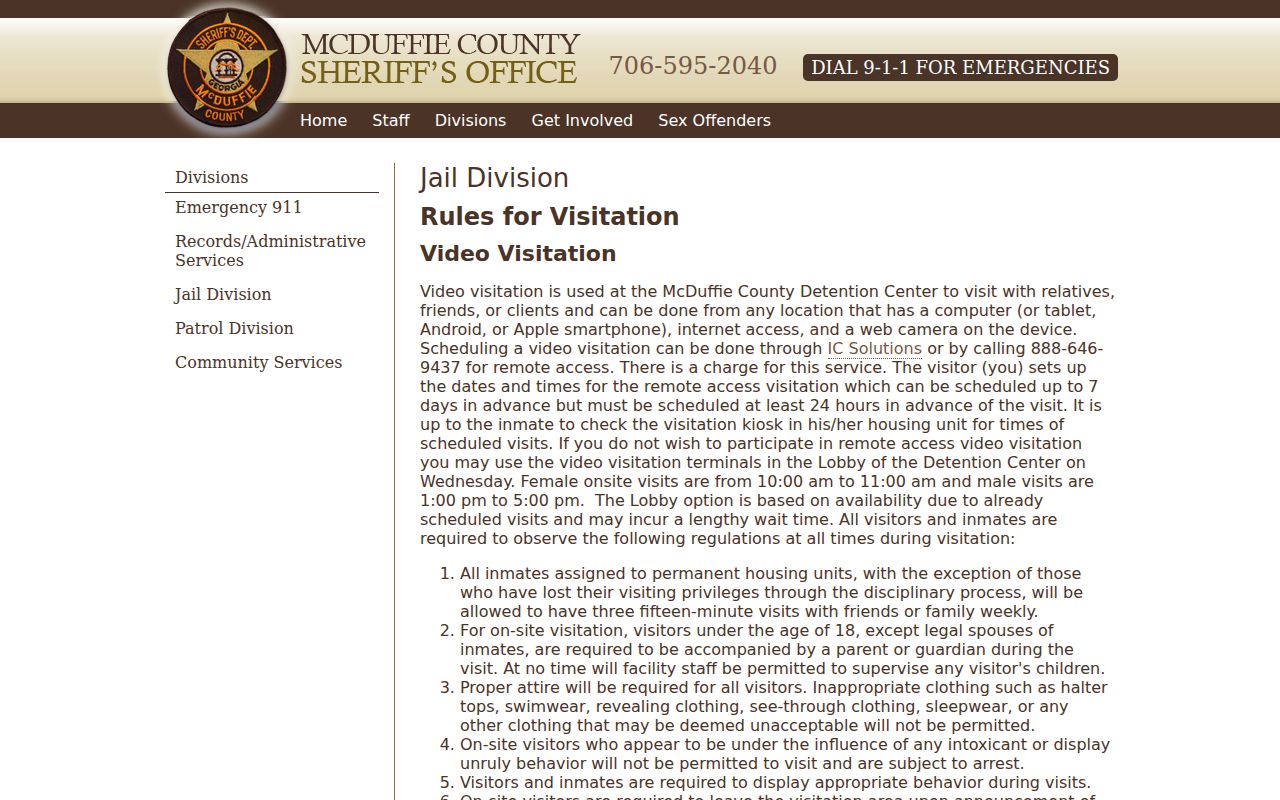
Bond secures release and appearance in a McDuffie County case; it does not dismiss the charge. Keep the receipt and next court date, and ask whether another agency hold changes release.
Handling an Arrest Warrant in Your Name
Confirm status first through the warrant line and the issuing court. Have your full name, date of birth, court, and any case number ready. Georgia warns that walking in can lead to immediate custody. Calling first lets a lawyer ask whether surrender can be planned, whether bond is set, and whether another hold exists. McDuffie County publishes no universal motion-to-recall form. A records request or a generic payment will not clear a criminal warrant. Follow the court's instructions on surrender, booking, bond if allowed, and the underlying case itself. An attorney can approach the issuing court about voluntary surrender, a planned walk-through, bond, or whether a recall or quash motion is legally available. Those options turn on the facts of the case, and the county promises nothing about advance arrangements preventing booking. If the paperwork involves a Thomson traffic failure to appear, Municipal Court's published payment-and-recall route may apply instead. That narrow city procedure is not for a felony arrest warrant or a Magistrate criminal warrant. After any surrender or service, verify the next court date and which court will hear the charge. Keep copies of everything: bond receipt, release paperwork, booking information, and any warrant return or court order. When the warrant originated elsewhere, ask which agency placed the hold and what must happen before release. A local bond may resolve the McDuffie County process while a separate hold from another jurisdiction still stands.
Important: Speak with an attorney before surrender. Confirm the warrant, bond, other holds, booking route, and next court date first.
McDuffie County Sealed Arrest Warrant Gaps
A blank search result in McDuffie County proves very little. The clerk keeps juvenile, adoption, and court-sealed files out of ordinary access, and investigative material can be restricted too. So an active warrant can sit unseen until it is served or a judge enters a later order lifting the seal. Anyone who needs a firm answer should press the court and its warrant line rather than trust a quiet lookup. The McDuffie County sheriff will take a written request for records that already exist, and the office holds itself to a three-business-day response standard or an explanation for delay. Expect possible costs, redactions, and exemptions, and note that no one there has to build a new roster just because you asked. The Georgia Open Records Act opens the door to public records that exist, subject to its exemptions. It never forces the sheriff to assemble a custom countywide list, settle a legal question, or expose a sealed warrant. A three-business-day response may deliver records, cite lawful withholding, estimate production time, or address cost. Treat the written request as one supporting route in McDuffie County, not a substitute for the warrant line, the issuing clerk, and legal counsel when personal status is urgent.